

Fasciolosis is a parasitic disease that affects sheep, cattle, and other livestock, and it is caused by Fasciola Hepatica or the Liver Fluke.
Liver fluke if undetected and left untreated can have a large financial implication on livestock farms. The disease can cause ill health, restrict growth and performance and even cause death in some cases.
The liver fluke has a complicated lifestyle that involves another host; the mud snail. As a result, the risk of fluke is greater in areas that favour the mud snail, namely wet conditions. Cattle are most likely to contract fluke when grazing poorly drained wet pasture, or areas around water troughs, or where there have been water leaks.
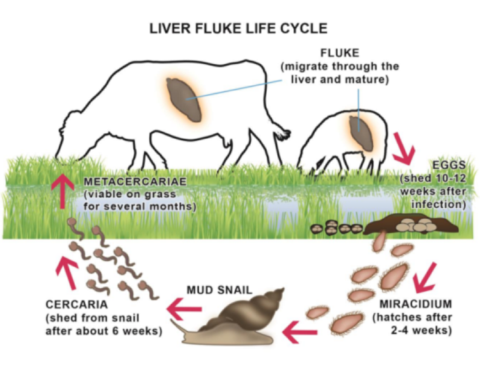
Source: https://www.cattleparasites.org.uk
Rozdziały artykułu
Identifying Liver Fluke Infection
Acute fluke infection is rare in cattle with chronic fluke more common. Symptoms of chronic infection are:
- Loss of Condition or reduced live-weight gains
- Reduction in Fertility
- Anaemia
- Diarrhoea
- Bottle Jaw
- Evidence of liver damage in slaughtered animals
Zapobieganie
Fluke can be prevented by reducing the chances of exposure of cattle to the fluke. Improve drainage or avoid grazing wet pastures, fence off wet areas and ensure there are no water leaks for example at water troughs.
Leczenie
If you are in an area prone to fluke and the presence of fluke has been identified from fecal sampling or factory reports then action is necessary. Youngstock should be treated within two weeks of housing and may need to be treated again after 8 weeks depending on the product used.
Products vary in their ability to control mature and immature fluke so consult your vet for the most appropriate treatment plan and product for your herd.
Aby uzyskać dalsze porady na temat powyższych kwestii, skontaktuj się z członkiem zespołu Moocall, aby porozmawiać z naszymi specjalistami ds. hodowli, dzwoniąc pod numer +353 1 96 96 038 lub wysyłając wiadomość e-mail na adres [email protected]
Dowiedz się więcej o Moocall HEAT tutaj: https://moocall.com/pages/moocall-heat-information
