
Malpresentation is one of the top five most common causes of calving deaths. Just 3-4% of all calvings are malpresentations although that figure is higher in first calving heifers.
Malpresentation occurs when a calf or calves try to leave the birth canal in an abnormal manner. There isn’t anything you can do to prevent this unfortunately.
The vast majority of animals will give birth without assistance and the calf will present in a normal anterior or ‘head’ presentation. This is where the calf’s front feet come first, followed by the head which is resting on the front legs and it is right-side-up.

Sometimes a ‘backwards’ presentation can occur, where the hind feet are presented with hooves facing upwards. This one is riskier than the head presentation because the head is the last part to come out and there is a risk of drowning, so delivery needs to be as quick as possible. However, sometimes they are deliverable.
Both anterior and posterior presentations can go awry, though, if an extremity isn’t presented right or the head is in the wrong place.
Additionally, what might look like a posterior presentation could actually be a malpresentation facing the other way.

It is important to know which way a calf is facing without presuming based on something you cannot see. However, if you even have one leg out you can tell which kind of calving it is. Here is a quick guide.
- If they are hind limbs, you’ll be able to feel hocks. The hocks are the large joint in the hind limbs which bend the opposite way to the hoof.
- The forelimbs can be recognised by the fetlock/carpal joint, the elbow joint and absence of the hock; the joints on the forelimbs will bend the same way as the hoof.
With this in mind, let’s take a look at some abnormal presentations.
Article Chapters
Two front legs presented with a calf’s head turned back
This type of calving is often mistaken for a calf coming backwards as the calf’s head isn’t immediately visible.
For this reason it is important that you know how to tell for sure what way the calf is facing by looking at their legs.
What you’re doing here is getting the head and straightening it so you can go ahead with an ordinary birth.
Apply lubricant to your hands/gloves and to the interior of the birth canal. If you are ambidextrous this job will be easier – depending on the situation, you will need to use a different hand.
If the head is bent back to the calf’s left flank, it’s easier to correct using your left hand, and vice versa.
Tie calving ropes to the two legs that are showing at vulva to maintain the calve’s posture during the rotation.
Reach into the birth canal and locate the head. Get a hold of the calf by the nostrils or mouth and raise it while rotating it towards the cow’s pelvic inlet.
Don’t use a rope on the calf’s head as this can lead to fracture of the jaw bone or the calf becoming wrapped up in the ropes.
Now that the calf’s head is straightened and located between the two front legs as normal, you can perform a forced extraction.
Keep in mind though that even after you have put the calf’s head in the correct position they are either unlikely to survive or will be a weakly growing calf.
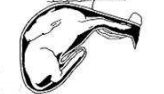
Calf presented with its head in the birth canal but one or both forelegs retained.
TYPES
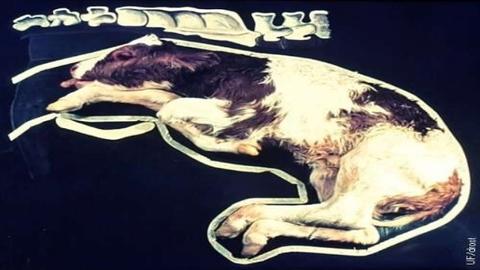
Carpal Flexion (one knee bent)
While in this position the calf cannot be born as the calf could break their leg and it could damage the cow’s birth canal.
Even if it seems like there is enough room, you don’t know what is happening with the hind legs and if there is another problem it could worsen things.
To fix it, reach in, push the limb up towards the body bending the higher joints first, and then extend the leg laterally towards the vulva.
Be sure to use plenty of lubricant before doing this, and be sure to retrieve the leg by bending it at its highest joints (the ones closest to the torso) first.
If you don’t, it can lead to the calf’s hoof damaging the birth canal which can lead to infection, infertility and in worst cases death.
Shoulder Flexion (Full leg Back)
To fix this, you have to convert it to a shoulder flexion and then to a normal position.
The first thing to do is tie a rope to the leg outside and repel the calf back inside the birth canal.
The uterus is the ‘roomiest’ place of the birth canal so it is the easiest place to turn the arm. The pelvis is the narrowest and can cause problems if the arm becomes lodged.
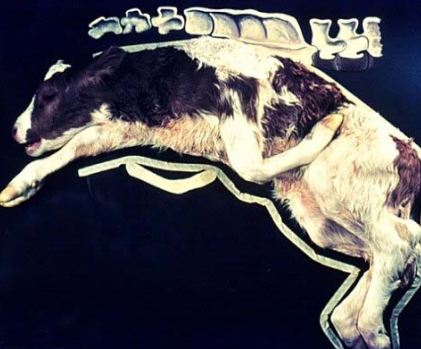
Once the calf is repelled into the birth canal, apply generous lubrication to your hand and locate the calf’s head, and then the shoulder.
Follow the calf’s shoulder down to the carpal region. Hold it and twist it toward the calf’s body.
Once you’ve twisted the leg towards the body, push the leg upwards towards the calf’s head by the shoulder joint and carpus.
Extend the leg into the pelvic inlet, but shield the hoof with your hand to prevent womb damage.
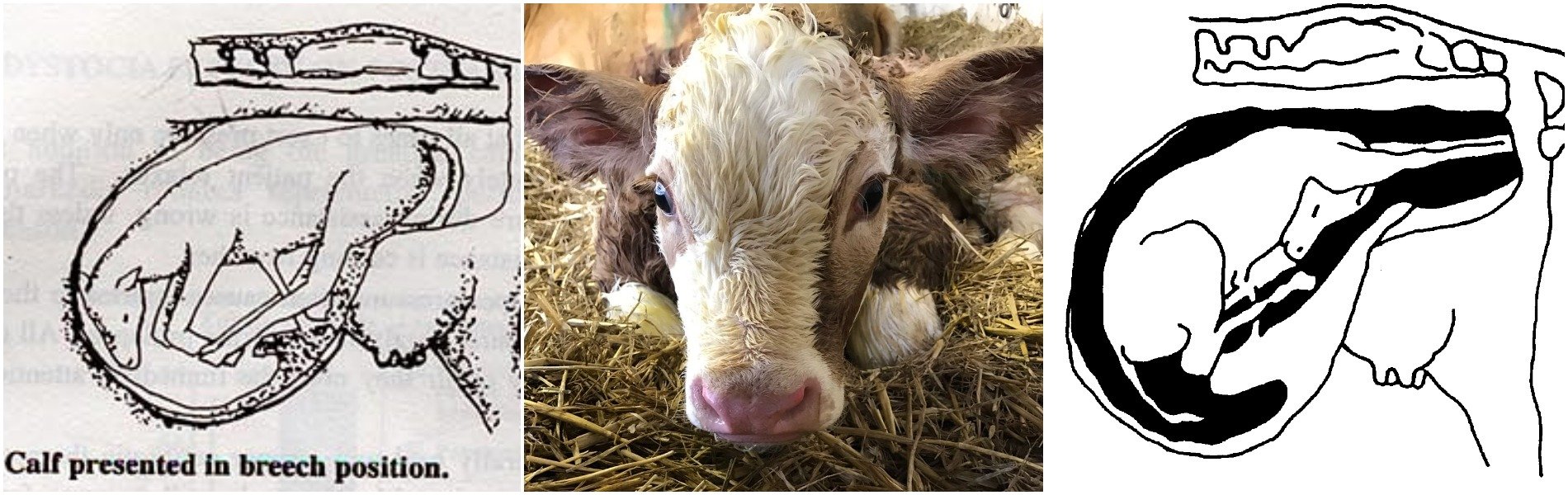
Calf presented in breech position
Breech births are some of the most dangerous for calves, because their head is the last thing to come out, and the umbilical vessels are being compressed against the rim of the mother”s pelvic bone.
This impairs, or even clamps off the flow of blood, oxygen and carbon dioxide between calf and mother.
This means you have to act fast when you do intervene, and a cesarean is often the fastest and best solution.
Types
Hip Flexion
Hip Flexion occurs when the calf presents backwards, the right way up, but only one of the legs in the birth canal is extended towards the vulva.
To solve this you’ll need to get the other leg to match, and then deliver safely.
First you’ll have to push the calf or limb back inside the cow. This will take less effort than other malpresentations because the calf won’t have gotten very far through the birth canal.
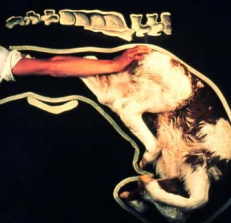
You’ll still need to attach that rope to the visible leg and apply lube to your hands though. Push on the tailhead/pins of the calf until you think there is enough room to work.
Next, you’ll have to retrieve the problem limb. To do this, find the tail or tailhead of the calf, and follow this down the side of the calf to find the hock, which is the middle joint of the hind limbs between the hoof and rump.
When you have a grip on the hock, rotate it so that the hock is pushed up towards the calf’s tailhead. You’ll want it as far up towards the body as is safely possible to make room to rotate the bottom of the leg.
The hoof should be in reach now. Hoop one of your calving ropes above the hoof.
Place your hand on the hock and push forwards and upwards while pulling the rope at the same time to rotate the leg towards the pelvic inlet.
Now, you should be able to perform a regular safe birth.
True Breech
This is similar to the hip flexion, except this time only the tailhead is presented at the entrance of the birth canal and both hind legs are tucked/bent towards the head.
There is no way at all the calf can leave the womb if things are left as-is. Usually only the tail can be felt at the pelvic inlet. This is a situation where you should definitely call a vet.
Essentially the way you deliver the calf in this situation is by bringing the hind legs into the birth canal so that they can be extended towards the vulva and a normal backwards presentation can take place.

First, apply lubrication to your hands and push the calf back as far as you can reach. More space is needed to rotate the calf’s limbs.
Next, get one of the calf’s hind legs. To do this you must first find the hock joint. Push the leg towards the calf’s body while flexing the hock and stifle joints as tightly as they will allow.
Adjust the leg in such a way that it can be rotated towards the vulva.
Do this by holding the leg between the hock and the hoof and twisting the hoof towards the body so that it ends up behind the calf ready to extend. If it is the right hoof, move it to the left. If it is the left hoof, move it to the right.
Lastly, fully extend the leg outwards towards the exit of the birth canal. It is paramount that you cup the hoof in your hand so that the cow’s womb is not damaged while you pull it upward.
Now, attach a calving rope to the leg you’ve just extended. Repeat the process with the other leg, and keep the rope fairly tense so that the leg doesn’t slip back into the position it was in before.
Once you do all this, the calf should be able to be born in a normal backwards presentation.
Two front legs presented with calf’s head down between legs
In this case, the calf is presenting in an anterior fashion, with both hoofs showing, and they’re facing the right way, but their head is tucked down between their legs and it hugging the body. Before you do anything, lubricate your hands and attach calving ropes to the calf’s feet in case they slip back into the womb.
Then, remedy the position of the calf’s head by grabbing them by the nostrils or mouth and pulling their head into the normal position in the pelvis. If excessive force is used, however, there is a chance that you could break the calf’s jaw.
See image below (right)

Transverse
In this case, the calf is upright and at a 90 degree angle to mother. On top of that, it is trying to present both it’s front and hind legs. Once you determine which set of legs is which, deliver the hind legs first so you don’t have to worry about the head.
To do this, push the forelimbs and head into the birth canal, and then pull the hind legs. This is one of the most difficult corrections to make. Because of this, a Cesarean may be necessary
Vertical
This, like in the transverse presentation, features the calf in an upright position perpendicular to the cow. This extremely unusual malpresentation poses similar problems to the transverse presentation and might well warrant a Cesarean instead.
Twin calves entering the birth canal
5-6% of pregnancies are twins in some herds. Normally they’re not a problem because twin calves tend to be smaller.
However, occasionally they can be trouble. If they do, there are many more limbs and extremities – eight legs and two heads – to cause a malpresentation.

The most common combination of parts is one backward (usually the first one) and one forward with both often trying to come together. This makes a breech more likely than in other cases.
In this situation, the first thing to remember is that the top calf must be the one to come out first.
Problems can arise if they adapt to the limited space available in the uterus by adopting abnormal positions. Follow the leg back to the body and make sure you are pulling on two legs from the same calf.
Be there!
Of course the most important thing in any of these cases is that you, or someone you trust is on the scene to assist during these calvings.
The best way to do this is to hook a Moocall Calving sensor up to your cow or heifer. It only takes a few minutes to do, but it provides you with an accuracy rate of over 90 per cent.
You only need to be there when you have to be; and you’ll be fresh when you are.

This gadget has already enabled thousands of farmers around the world to save their calves – and once you save one, you’ve made your money back.
Learn more about Moocall Calving Sensors here: https://moocall.com/products/moocall-sensors
If you found this blog post helpful, be sure to share it with your fellow farmers. Have you had a difficult calving experience? Let us know in the comments.
