Blogs

Blogs2021-11-12T12:26:36+00:00

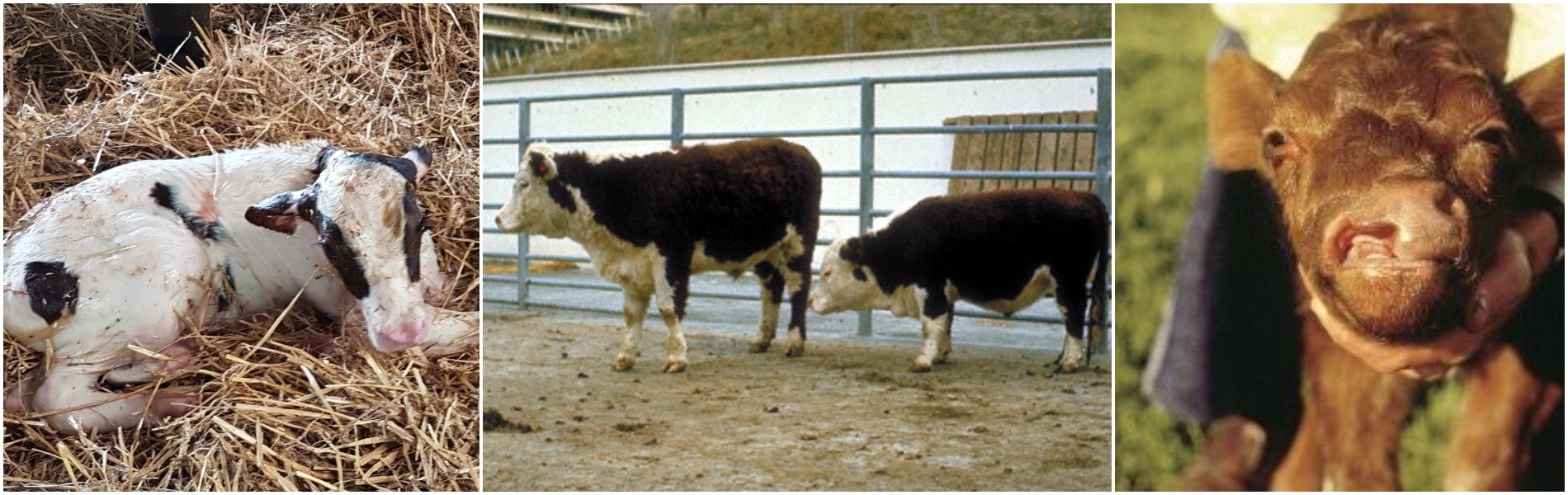
Common Birth Defects in Calves; Dwarfism, Taillessness & More

February 23, 2018|News|

Occasionally a seemingly ordinary cow or heifer will give birth to a calf with abnormalities. On the surface, everything could look ordinary with the sire too.

Regardless, these abnormalities occurred during gestation and may affect how their body looks, works or both.

0.5 -1.0 percent of calves are born with congenital defects, however not all birth defects in calves are genetic. Here are some defects that you might run into.

Things to Look Out For in Your Bull at Breeding Season

February 22, 2018|Breeding|

You've perfectly manicured his hooves and combed his silky coat. You're now ready to let your bull in along with the cows.

But is he ready to start breeding them? Your bull may have other ideas.

Is your bull looking sheepish after doing the business reliably for the last few years? Did he get off to a great start and then come to a grinding halt?

Here are a number of things you need to look out for to make sure your bull is working this breeding season.

What NOT to Do When Reviving Your Newborn Calf

February 21, 2018|Calving|

Sometimes when a calf is born, often after a difficult birth, they have difficulty breathing at first.

There are a number of things you can do to help in this case: 'christening' them, 'hanging' the calf, stimulating their nostrils with a bit of straw, and more.

However, while you may intervene to help the calf, there are things you can do that could potentially harm them too.

Here are some tips to avoid that.

Mature Weights In Cattle – Is Bigger Really Better?

February 20, 2018|Breeding|

Many beef farmers place a good high mature weight as the most important factor when planning sires for the year ahead.

However, to go exclusively off that would be foolish, and if they are on a small to medium sized operation it could lead to problems down the line.

How to Care for your Stock Bull

February 19, 2018|Breeding|

The stock bull is a fixture in many Irish suckler farms. However, while they are the primary method of getting cows and heifers in calf in most of these operations, 3-4% of bulls are infertile.

As well as that, a further 15-20% are partially or periodically infertile according to Teagasc.

While some of the latter figure is inevitable, some of it can be prevented with early intervention. And if you identify your infertile bull early, you can minimise your losses.

What Makes Moocall HEAT Stand Out?

February 19, 2018|News|

Our latest product Moocall HEAT takes the hassle out of heat detection in cows and heifers.

The system - made up of an electronic neck collar for the bull and Moocall RFID tags for the cow - detects 98% of heats in cattle including silent heats.

While farming technology already has some solutions to heat detection, here's what sets our product apart.

Lameness & Arthritis in Bulls

February 16, 2018|Breeding|

Lameness in bulls is a major impediment to their reproductive performance - as you can well imagine, it makes their job a lot harder.

It is a common condition with 20-35% of cows suffering from it to some degree. If a bull has a lameness problem he probably won’t be able to perform his task.

Lameness in bulls can come about for a number of reasons, including:

6 Factors That Affect Stock Bull Fertility

February 16, 2018|News|

When it comes to bulls, fertility is of upmost importance. Their job is securing the future of your herd, and if he can't do that to his best ability then it can put a farmer out of pocket.

Sometimes you can help him, sometimes you can't. Here are a number of things that affect a bull's fertility.

Go to Top